Types of cabinet doors: 14 styles, three constructions, and which suits your kitchen
Choose the construction before the door: inset, full overlay or frameless changes how any door looks and what it costs. Then 14 door styles, from shaker and slab to fluted, cane and ribbed glass, with where each works and what it is like to live with.

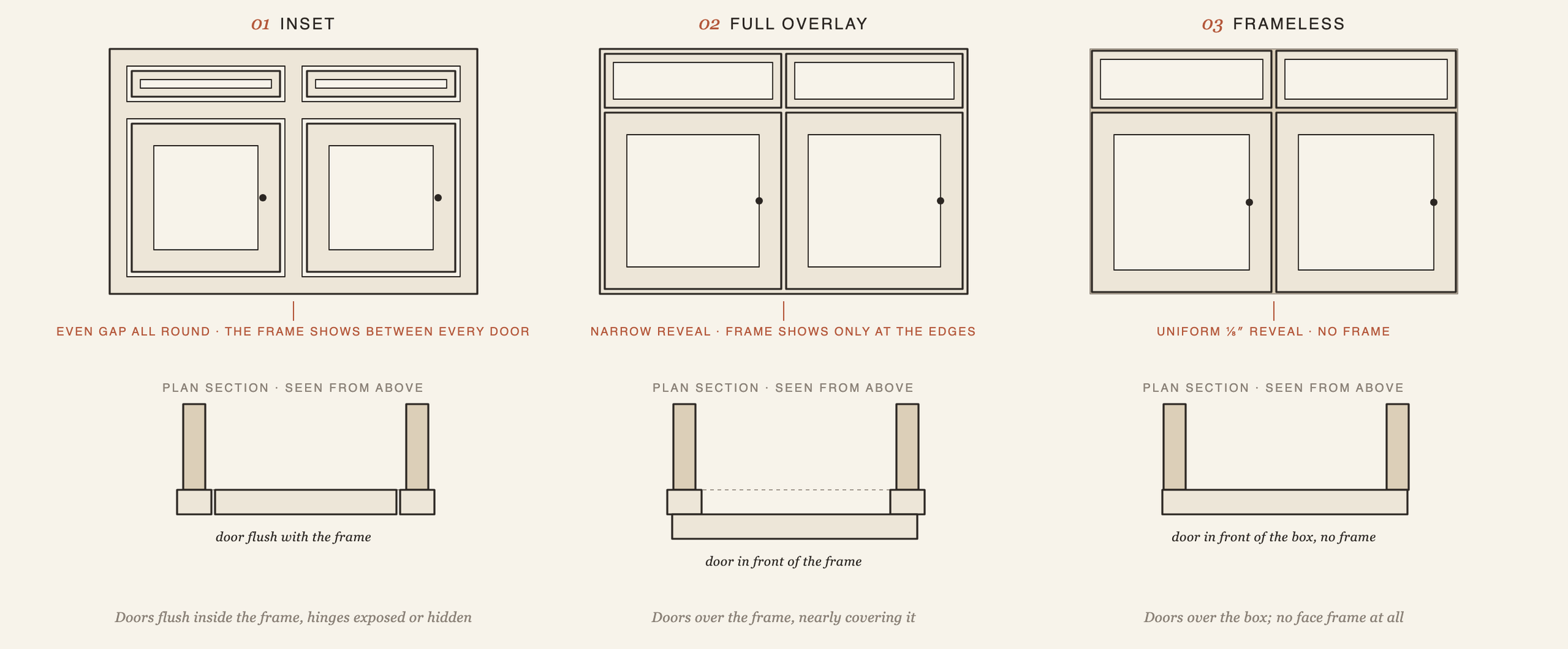
A kitchen is mostly doors, so this is the decision that sets its character. Make it in two steps: the construction first, then the door, because the same shaker door looks different in each of the three constructions. The first is face-frame with inset doors. A solid wood frame is fixed to the front of every cabinet box and the doors sit inside it, flush, with an even gap of about a tenth of an inch all the way round. It reads as furniture, it needs the best carpentry (the gaps show every error), the hinges can be exposed brass butt hinges or concealed, it costs the most, and every drawer loses about an inch of width to the frame.
The second is face-frame with overlay doors: the same frame, with the doors mounted over it. Full overlay covers nearly all of the frame and reads as a clean grid of doors with narrow reveals; it is what most American custom and semi-custom cabinetry is. Partial overlay leaves an inch or two of frame showing around every door. That is the builder-grade kitchen of the last forty years, and the one we skip. The third is frameless, the European method: no face frame at all. The doors cover the boxes with a uniform reveal of about an eighth of an inch, every hinge is concealed, each cabinet holds a little more, and it is the default for slab doors and modern kitchens.
The doors below are grouped by what they do for a kitchen: the everyday door, texture, and light and glass. Each has four lines: what it is, where it works (which construction, which rooms, uppers or lowers, island or perimeter), what it is like to live with, and what it pairs with. Cost is on a four-step scale, from $ to $$$$, relative to the other doors here; the construction and the finish move the price more than the door style does.
In this guide
Before the doorThe three constructions
| Construction | Look | Cost | Storage | Who builds it |
|---|---|---|---|---|
| Inset | Doors flush inside the frame, even gaps all round; furniture-like; exposed or concealed hinges | Highest: the frame, the fitting and the tolerances | Least: about an inch lost in every drawer and opening | Custom shops and a few semi-custom lines; the gaps show the carpenter's skill |
| Full overlay | Doors over the frame with narrow reveals; a clean grid; the frame shows only at the ends | Middle | Most of the opening; the frame still narrows the drawers a little | Most American semi-custom and custom lines |
| Frameless | No frame; doors cover the box with a uniform eighth-inch reveal; hinges always concealed | Middle, often less than inset for the same door | Most: full-width drawers and nothing to reach past | European makers, most modern custom shops, and stock lines such as IKEA |
The everyday doorThe door you live with every day
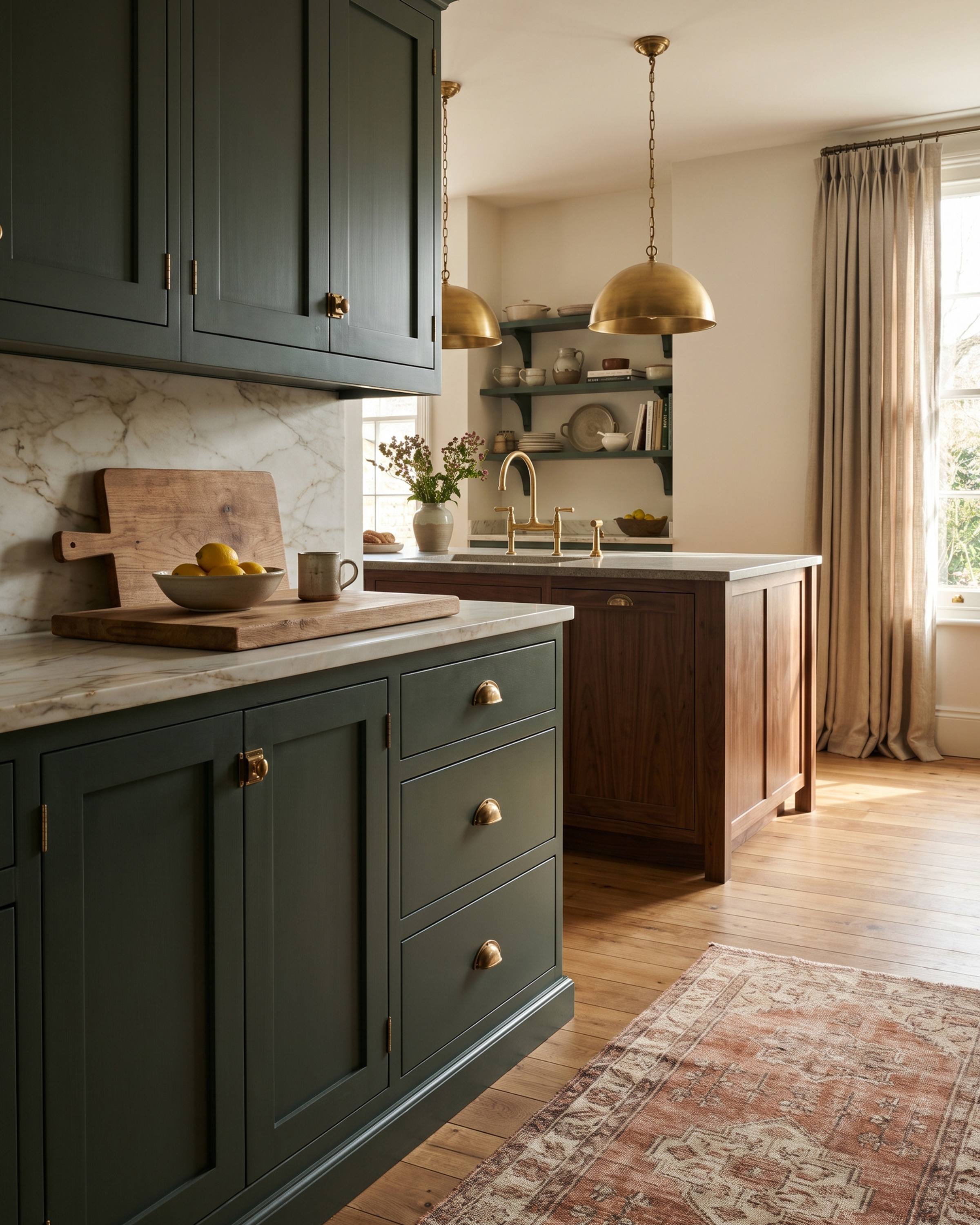
Most of a kitchen is this group. Our default is a shaker or a slim shaker, inset in an older house and frameless in a newer one, painted on the perimeter with the island in wood; a slab in rift oak when the house is modern; beaded inset when the house has the history to carry it. Raised panel, the door with a moulded, stepped centre that rises to meet the frame, is the one door we don't specify: it dated the kitchens of 1995 and it dates a kitchen now.
Shaker
- What it is
- Five pieces: a flat centre panel set into a frame of two stiles and two rails, square-edged, with no moulding. The rails are about 2.5 inches wide. Named for the Shaker communities whose plain furniture it copies, and the one door that has survived every kitchen trend since.
- Where it works
- Any of the three constructions: inset is the most traditional, frameless the most current. Every room in the house. The whole kitchen, or the lowers only, with slab or glass doors above. Island and perimeter.
- Living with it
- The ledge where the panel meets the frame collects dust and grease; a weekly wipe. Painted solid wood shows a hairline at the joints as the wood moves with the seasons; an MDF centre panel in a painted door avoids it. Stained, the grain changes direction at every joint, which is the point.
- Pairs with
- Honed quartzite or Carrara on top, an eased edge. Unlacquered brass cup pulls and knobs, or polished nickel. Paint: Farrow & Ball Studio Green on the lowers with a warm white above, or Benjamin Moore White Dove throughout.
Slim shaker
- What it is
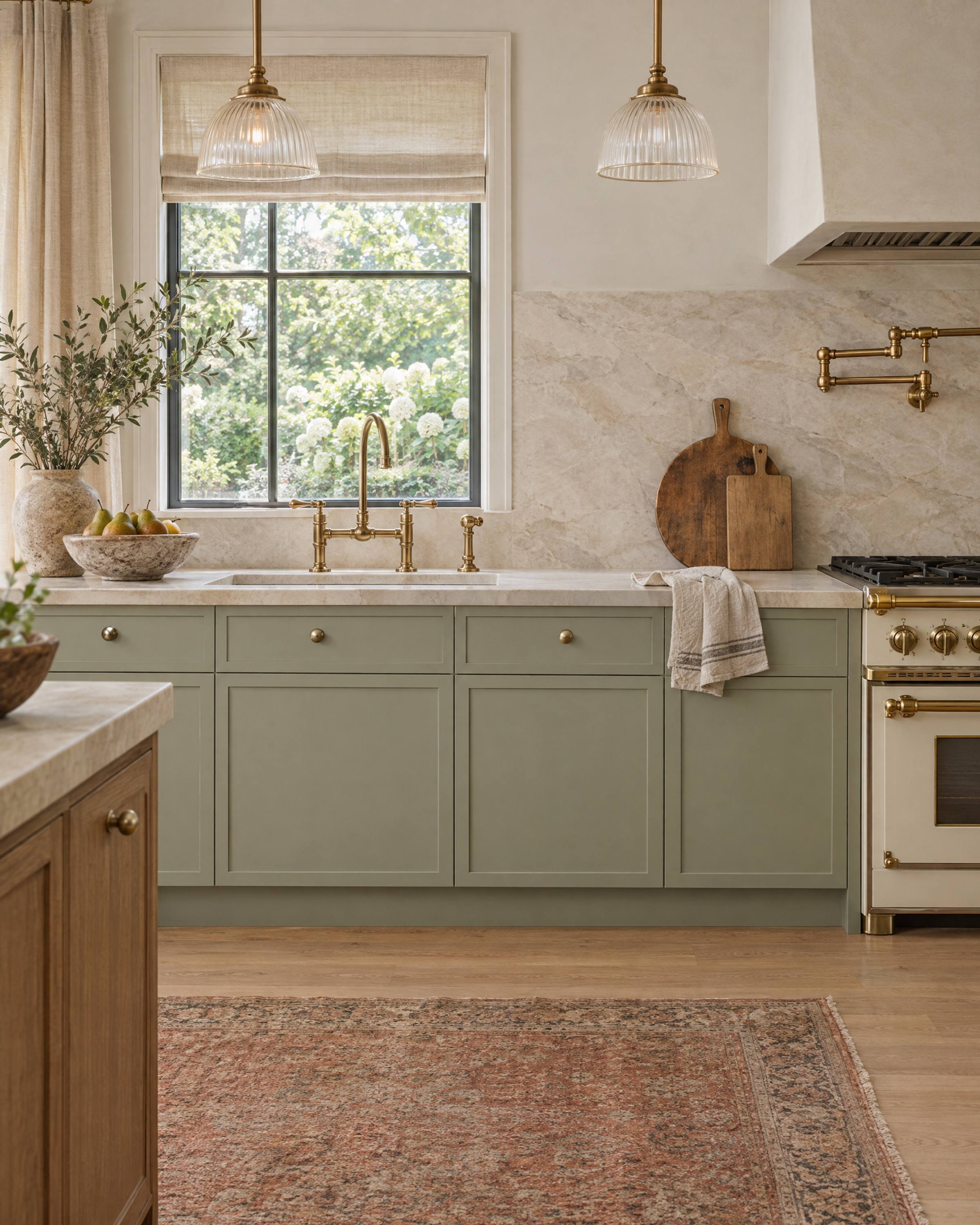
- The same five-piece door with the stiles and rails narrowed to between three-quarters of an inch and 1.5 inches, so the panel is nearly the whole door. It reads as a slab from across the room and as a shaker up close: the door of the designer kitchens of the 2020s.
- Where it works
- Frameless and full overlay, where the thin frame keeps the grid clean; inside an inset face frame the narrow rails look mean beside it. Modern and transitional kitchens, baths, laundries. Island and perimeter.
- Living with it
- The same ledge, less of it. The narrow frame leaves little wood around the hinge cup, so the door needs a good core and good hinges. Painted most often; in rift oak it is the quietest wood door after a slab.
- Pairs with
- Honed Taj Mahal quartzite or soapstone. Slim brass bar pulls, or an edge pull on the top rail. Paint: Benjamin Moore Hale Navy or Farrow & Ball Railings on the lowers, Farrow & Ball School House White above.
Slab
- What it is
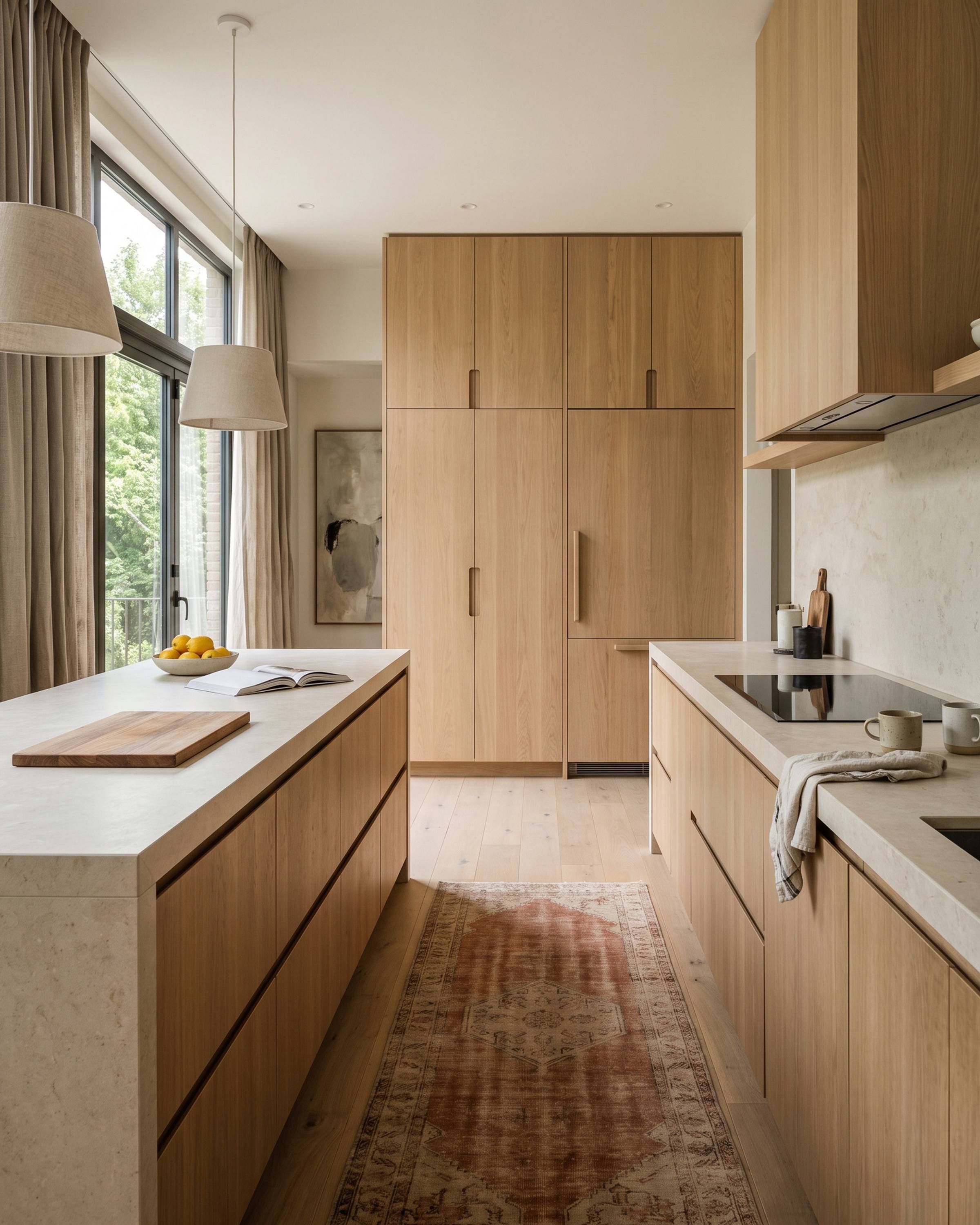
- A flat door with no frame and no panel: a single piece of veneered plywood or MDF, or solid wood for narrow fronts. In wood, the grain runs unbroken across a run of doors and drawers when the shop sequences the veneer from one flitch. The modern door, and the one that shows the construction most.
- Where it works
- Frameless, nearly always; the point is the uninterrupted plane. Modern kitchens, a walnut or oak island in a painted kitchen, baths, a bar, the fronts of integrated appliances. Island and perimeter.
- Living with it
- Nothing to dust. Fingerprints on dark paint and matte lacquer; oak hides them. Veneer chips at a corner if it is hit, and a cheap edge band shows its line in time. Grain matching is what you pay for; without it the doors look random.
- Pairs with
- Honed soapstone or a quiet cream limestone, a mitred edge. Recessed finger pulls, or long slim pulls in blackened steel or brass. Rift-sawn white oak, or paint in Farrow & Ball Pigeon.
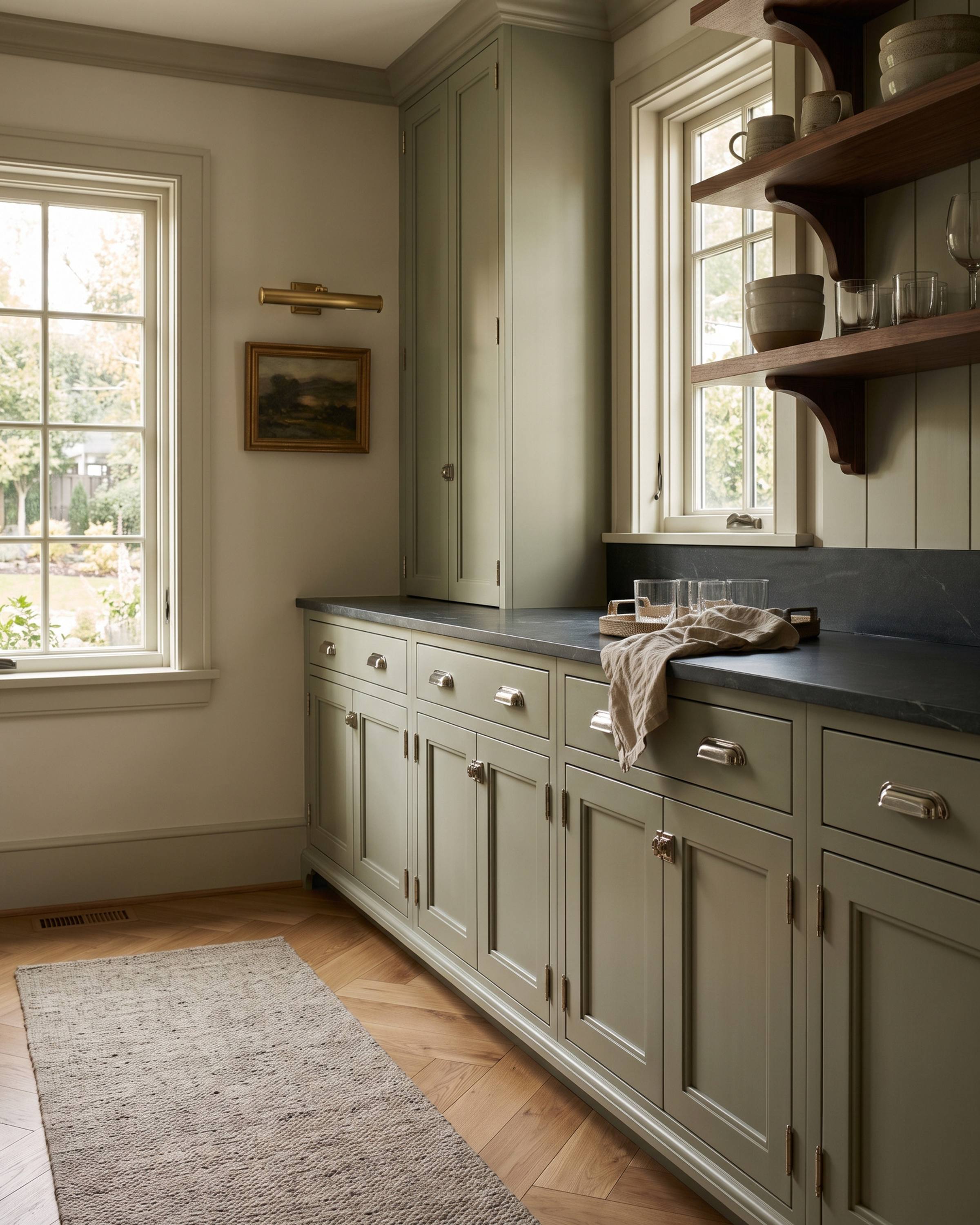
Beaded inset
- What it is
- Inset doors in a face frame whose inside edge carries a small rounded bead, so a fine line of shadow runs around every door and drawer. The door itself is a flat-panel shaker; the bead is on the frame. The most traditional door here, from the butler's pantries of the 1900s.
- Where it works
- Inset only, by definition. Older houses: a 1920s colonial, a pre-war apartment. Butler's pantries, a bath vanity, a library. The whole kitchen, or the perimeter with a plain island in wood.
- Living with it
- The bead is one more edge to dust and one more place paint builds up; have it sprayed well once. Exposed butt hinges and latches are part of the look and need a cabinetmaker who fits them by hand. Solid wood moves; the gaps breathe with the seasons.
- Pairs with
- Honed Carrara or soapstone with an ogee or a bullnose edge. Polished nickel latches and butt hinges, or unlacquered brass. Paint: Farrow & Ball Pointing or Benjamin Moore Simply White; Farrow & Ball Card Room Green for a pantry.
TextureTexture you can feel
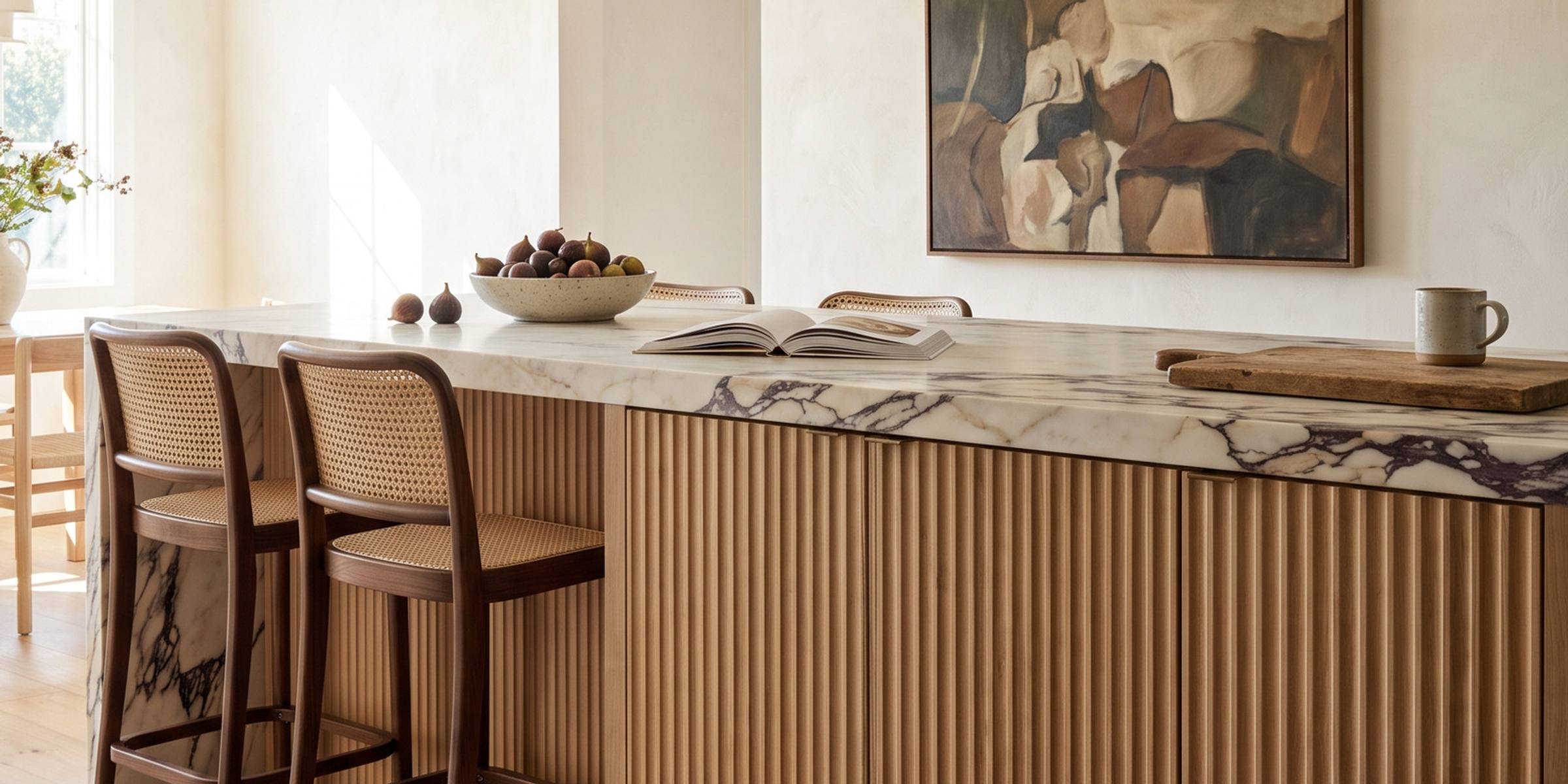
One textured door per kitchen, where a hand or the light will find it: the back of the island, a bar, a pantry, a vanity. Fluted and reeded in white oak or walnut; cane on a hutch or a pantry; beadboard where the house is a cottage; a tambour over the coffee machines. What we skip: fluting on every door, which turns a kitchen into a radiator; and fluted MDF painted, which chips at the ridges.
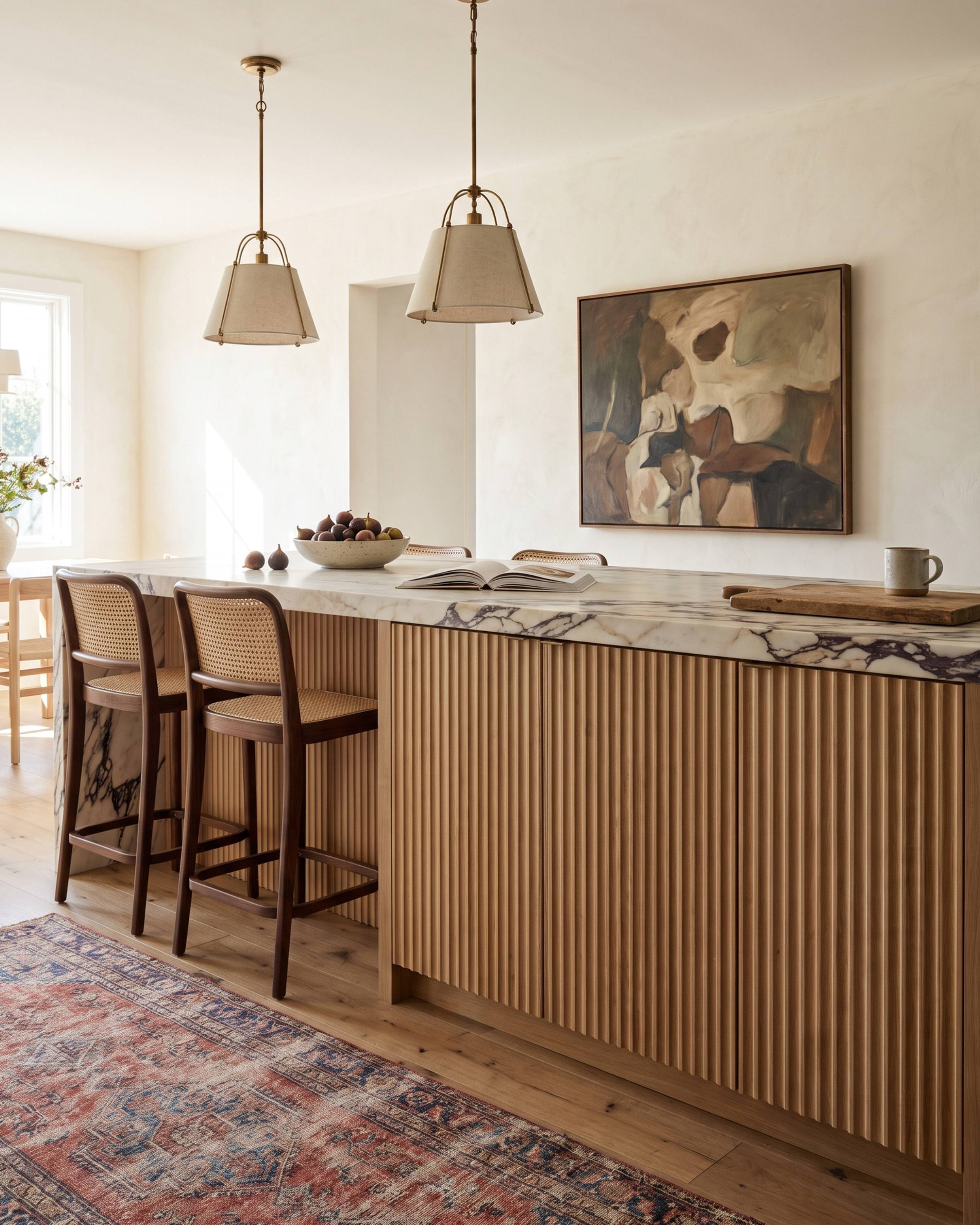
Fluted
- What it is
- Vertical concave grooves cut side by side into solid wood or a thick veneer, each about three-quarters of an inch wide, so the face is all scallops. The groove is scooped in. The island front of the 2020s, most often in white oak.
- Where it works
- Island backs and ends, a bar front, a range hood, a vanity; rarely a whole perimeter. Frameless, or as a panel applied to a slab. Lowers more than uppers; fluting at eye level looks heavy.
- Living with it
- The grooves hold dust and crumbs; a soft brush. Solid oak flutes wear well; painted MDF flutes chip at the ridges. The light changes it hour by hour. Used once in a house it will last; used everywhere it will date.
- Pairs with
- Honed Calacatta Viola or a cream quartzite with a thick mitred edge. No hardware, or a small brass knob. White oak left natural, or painted Farrow & Ball Setting Plaster.
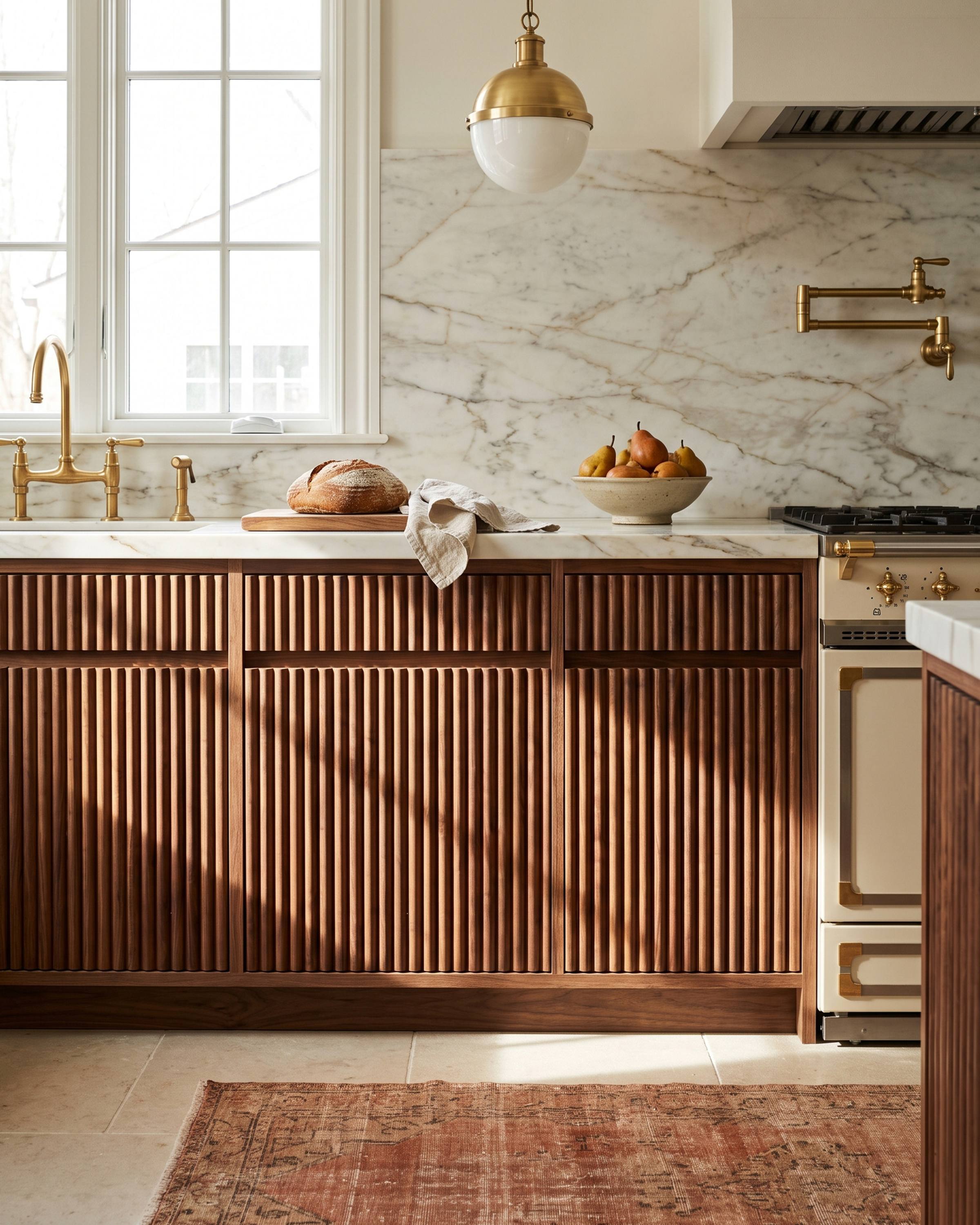
Reeded
- What it is
- The opposite of fluted: half-round ribs that stand proud of the surface, finer and tighter, like reeds laid side by side, each about half an inch. In solid wood, as a veneered reed panel, or in MDF.
- Where it works
- A vanity, an island front, a bar, or the lower run of a kitchen in walnut under a pale stone, with plain painted uppers. Frameless, or applied to a slab. Walnut shows it best; painted, it reads as a stripe.
- Living with it
- Ribs catch less dirt than grooves, but their edges chip, and a thin veneered reed is fragile. Finger pulls don't work on it; use a knob or push-to-open. Stained, it is texture; painted, it is pattern.
- Pairs with
- Honed Calacatta Gold or Rosa Portogallo on a vanity. A tiny brass knob, or none. Walnut, or painted Farrow & Ball Green Smoke.
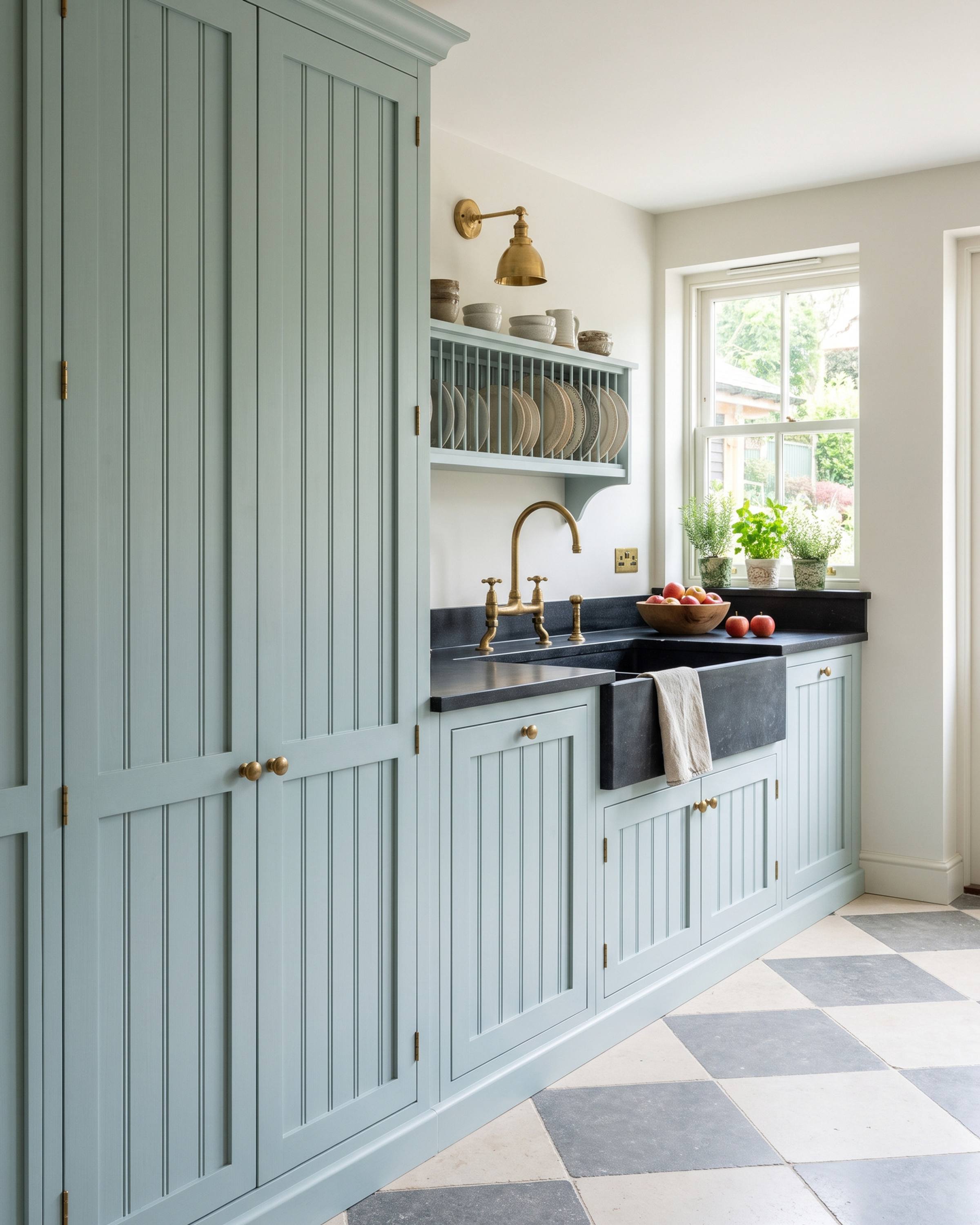
Beadboard
- What it is
- A shaker frame with a centre panel of narrow tongue-and-groove boards, a bead at every joint; or a flat panel routed to look like them. The cottage door: coastal, farmhouse, the back of a 1910 house.
- Where it works
- Inset or full overlay. A scullery, a laundry, a pantry, a mudroom, a bath, the ends of an island. Not a whole modern kitchen. Uppers and lowers alike.
- Living with it
- Every bead line is a dust line, and paint pools in the grooves; brush before you repaint. A routed MDF panel never gaps; real boards do, a little, every winter. Honest in an old house, themed in a new one.
- Pairs with
- Soapstone or honed Carrara with an eased edge. Aged brass knobs and butt hinges, or iron. Paint: Farrow & Ball Light Blue, Benjamin Moore Wythe Blue, or a warm white.
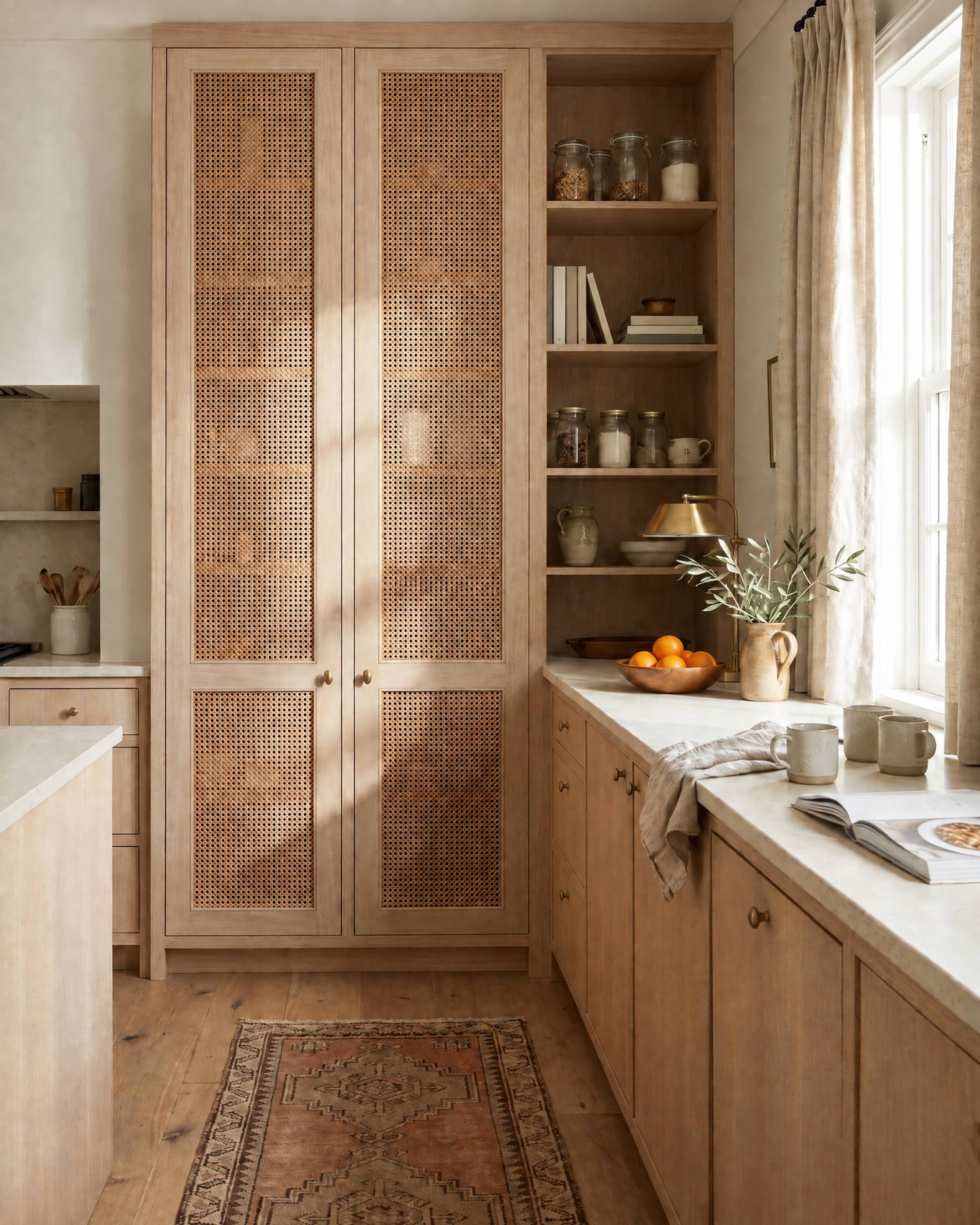
Cane
- What it is
- A panel of woven rattan cane, the open hexagonal weave of a chair seat, stretched inside a solid wood frame, with linen, glass or nothing behind it. From French and Scandinavian furniture; in kitchens since about 2020.
- Where it works
- A pantry, a hutch, a bar, a vanity, a laundry: anywhere the contents are tidy and may be seen. Frameless or inset; tall doors show it best. Never beside the range.
- Living with it
- Cane is open: dust goes in, and grease near a cooktop stains it for good. Line it with linen if the shelves must hide. It yellows a little in sun, it can't be scrubbed, and a cat will find it.
- Pairs with
- A white oak frame, a honed limestone counter, aged brass knobs. Walls in Farrow & Ball Slipper Satin or a warm plaster.
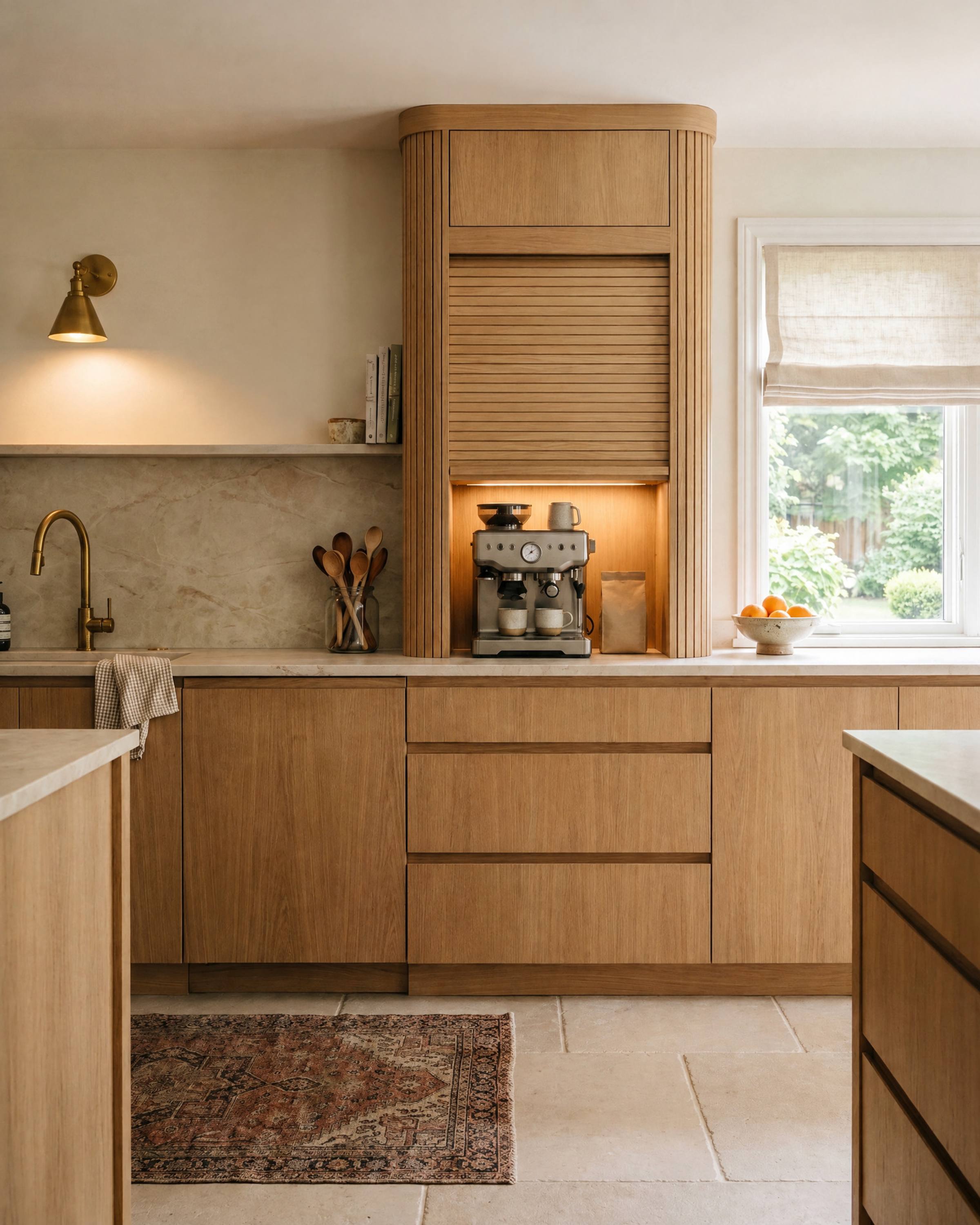
Tambour
- What it is
- A roll-up door: narrow vertical slats of wood glued to a flexible backing, running in a curved track so the door slides up and over into the top of the cabinet instead of swinging out. The appliance garage of the 2020s, in white oak most often, and the descendant of the roll-top desk.
- Where it works
- A cabinet that sits on the counter: the coffee station, the toaster and blender corner, a bar. Frameless, built into a run of slab or slim shaker doors in the same wood. One or two per kitchen, never a whole run.
- Living with it
- The slats collect dust like reeding; a soft brush. The track and the roll need a good maker, or the door sticks and rattles; ask to see one working. It hides the one counter you never want to tidy, with the machines plugged in behind it.
- Pairs with
- Rift white oak slab doors around it, a honed cream quartzite counter, no hardware or a small brass finger pull. Paint: Benjamin Moore Swiss Coffee on the walls.
Light and glassLight, glass and reflection
A run of solid doors needs a break, and these are the five ways to make one: clear glass beside the window, ribbed glass over a bar or a coffee station, antique mirror at a bar, brass mesh on a pantry, and an arched panel as the one flourish. We use one of them in a kitchen, two at most. What we skip: mullioned "divided light" glass doors in a house whose windows have none, and mirror on lower cabinets, where every shoe scuffs it.
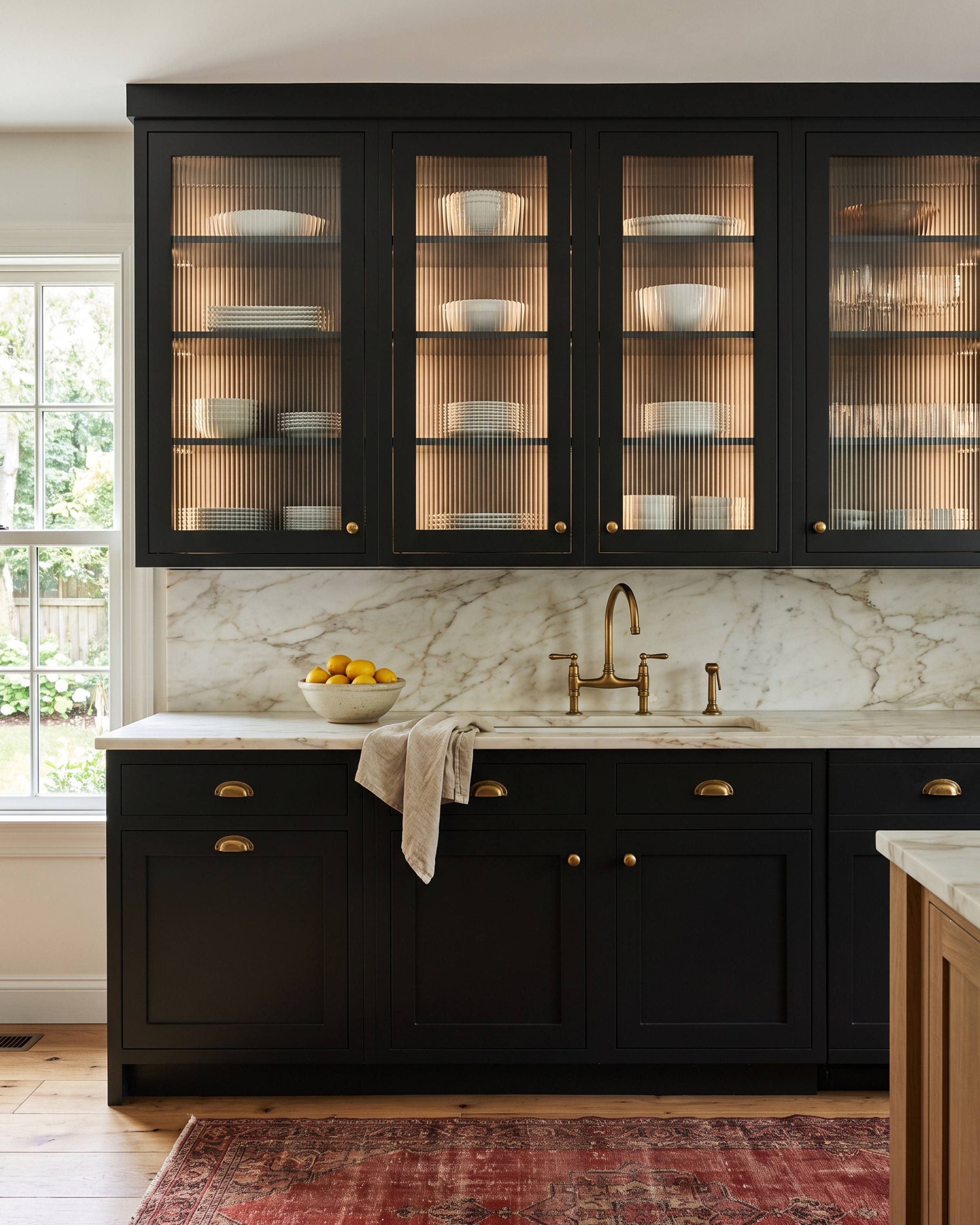
Ribbed glass
- What it is
- Fluted glass in a wood or metal frame: parallel ribs that bend the light, so what is behind becomes soft vertical streaks. Ribs from a quarter-inch to an inch; clear, bronze or smoked.
- Where it works
- Uppers over a bar or a coffee station, a pantry door, a tall cabinet, a bathroom mirror cabinet. Frameless or inset, in walnut, oak or black steel. A light inside the cabinet is what makes it.
- Living with it
- It hides clutter but not colour: glasses and white bowls look good behind it, cereal boxes don't. Keep the ribs on the inside face, where they collect dust, and the smooth face out, where fingerprints wipe off.
- Pairs with
- Honed Nero Marquina or soapstone under walnut. Aged brass. Paint: Benjamin Moore Linen White on the walls, or Farrow & Ball Jitney.
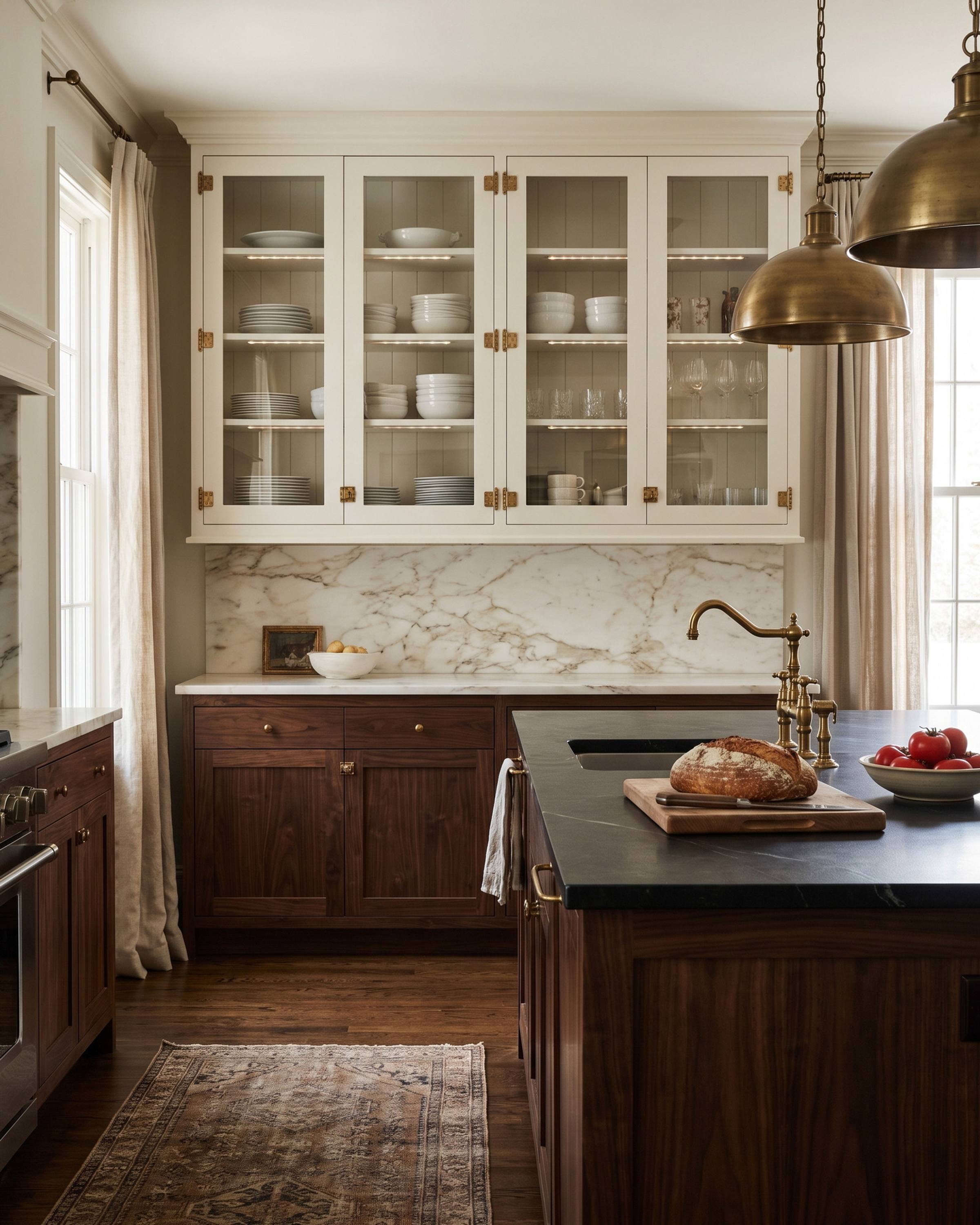
Clear glass
- What it is
- A shaker frame with a single clear pane, or divided by mullions into smaller lights in a traditional kitchen. The door that shows everything.
- Where it works
- Uppers only: two or four doors beside a window or over the sink, a hutch, a dining-room cabinet. Inset in a traditional kitchen. Mullions only in a house with mullioned windows. Never on lowers, and not beside the range.
- Living with it
- What is behind must be arranged: white plates, glass, nothing else. Fingerprints and smears on the glass. Interior lights on a dimmer. Ask for tempered glass, so a knock makes crumbs, not shards.
- Pairs with
- Honed Calacatta Gold or Carrara. Unlacquered brass latches and butt hinges. Paint: Benjamin Moore White Dove outside, the inside of the cabinet in Farrow & Ball Pigeon.
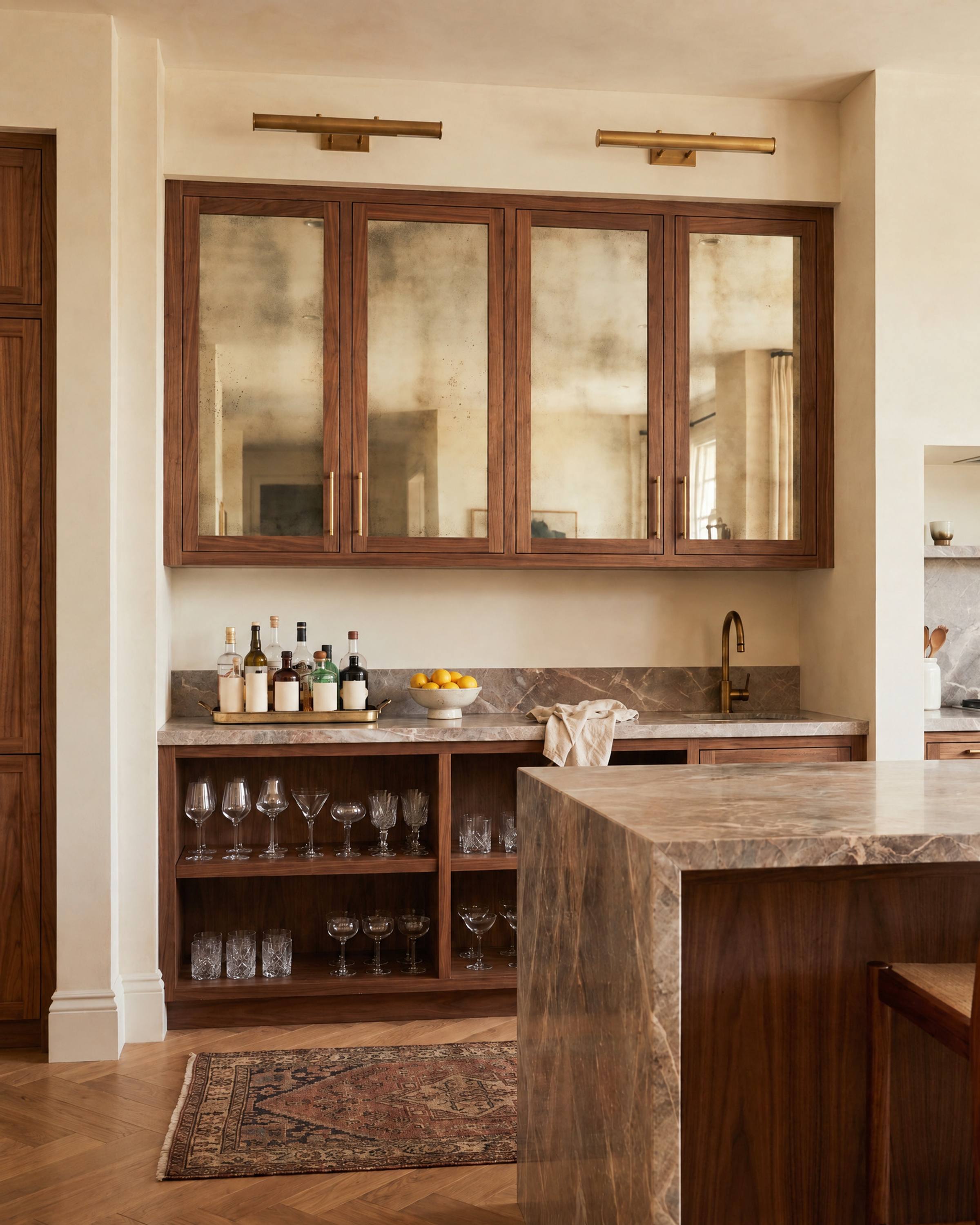
Antique mirror
- What it is
- Mirror glass aged by hand or acid until it is foxed, smoky and uneven, set in a frame or as a flat slab. It reflects the room softly and doubles the light.
- Where it works
- A bar, a butler's pantry, a dining-room cabinet, a powder room. Uppers only, a few doors, in walnut or black frames. Never the main run of a family kitchen.
- Living with it
- Fingerprints and splashes show, so it lives away from the sink. Antiquing varies by maker; see a sample in daylight. The glass is made to order and not cheap. It reflects what faces it, so plan the view.
- Pairs with
- Polished Rosso Levanto or honed Nero Marquina on the bar. Aged brass picture lights. Walnut. Paint: Farrow & Ball Off-Black or Jitney.
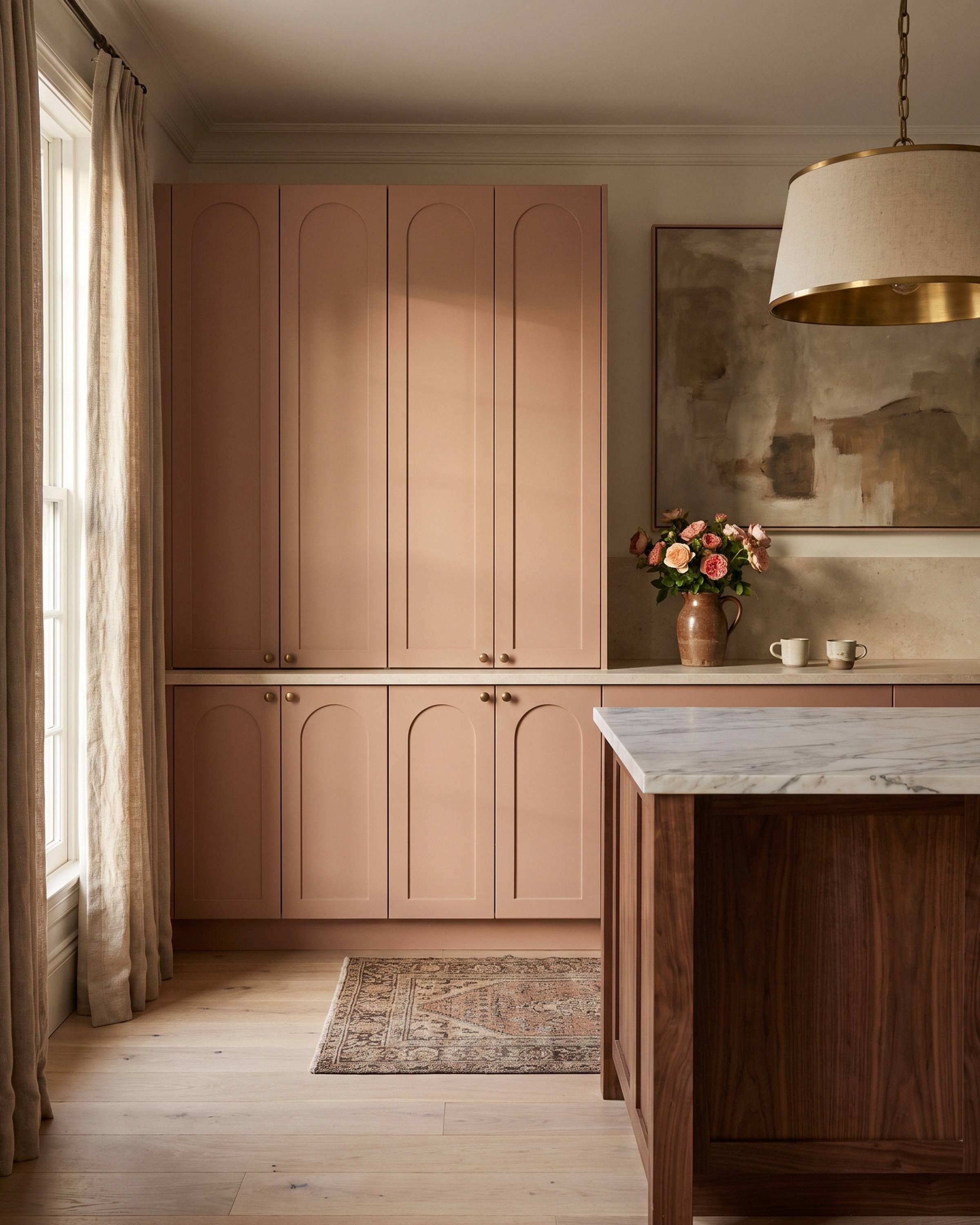
Arched panels
- What it is
- A recessed-panel door whose panel is arched at the top, the frame following the curve; or an arched opening cut into a slab. Not the stepped "cathedral" arch of a 1980s raised-panel door. The softening line in a square kitchen, since about 2023.
- Where it works
- Tall doors: a pantry, a hutch, a refrigerator panel, a vanity, the ends of an island. One run, not the whole kitchen. Frameless or full overlay; an inset arch is expensive to fit.
- Living with it
- A hand-finished curve costs more and shows bad painting; MDF is the right core. Dust sits on the arch's lower edge like any panel. It dates faster than a square door, so use it once.
- Pairs with
- Honed cream limestone or Calacatta Viola. A small aged brass knob. Paint: Farrow & Ball Setting Plaster, Sulking Room Pink or Dead Salmon; or white oak, unpainted.
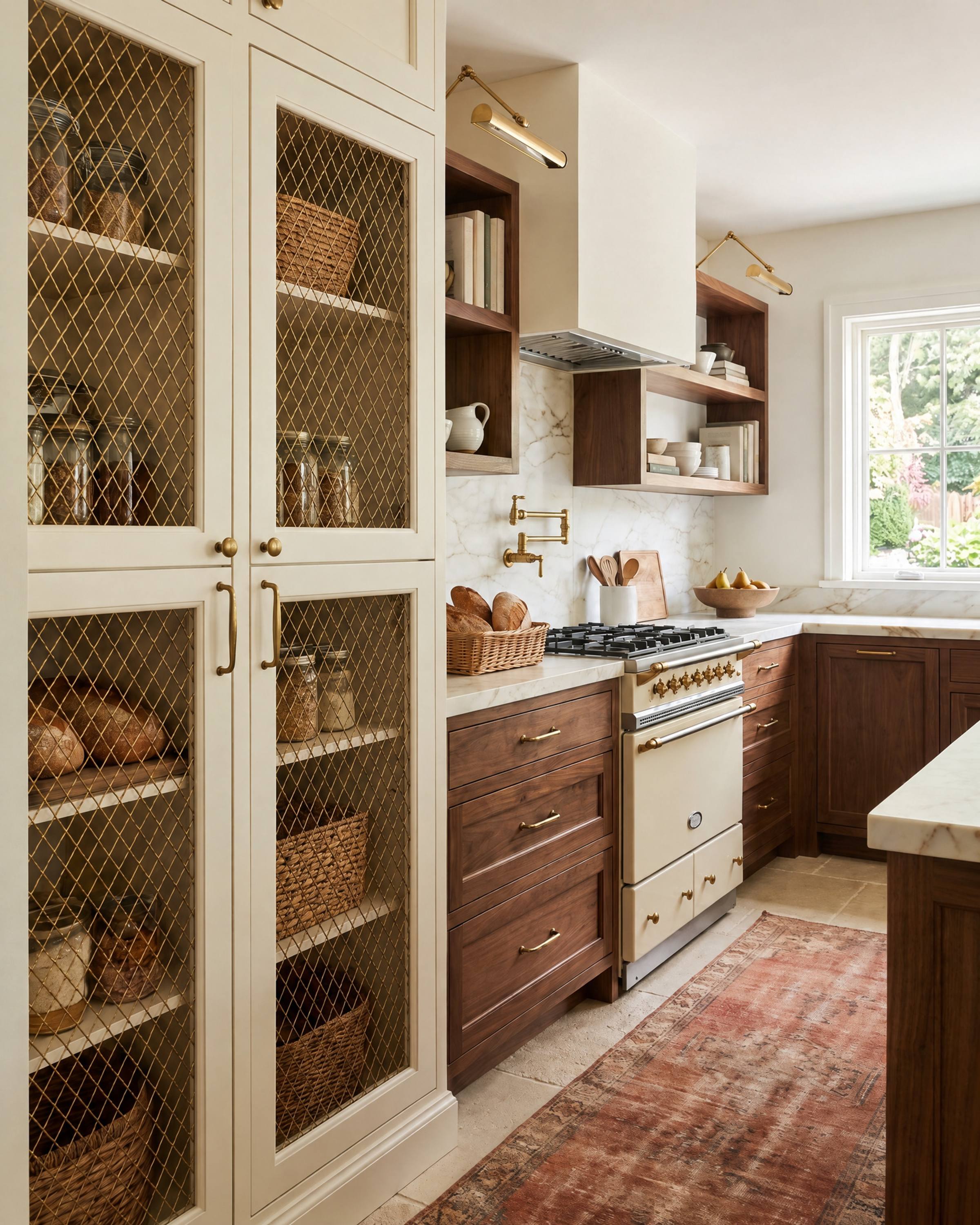
Brass wire mesh
- What it is
- Woven brass or bronze wire, a plain or diamond weave, stretched in a wood frame, as on a 19th-century pie safe or a French buffet. Antique brass, bronze or blackened steel.
- Where it works
- Pantry doors, a bar, a hutch, a radiator cover, a laundry; uppers and tall doors. Inset or frameless with a dark or stained frame. Air passes through, so bread and produce keep better behind it.
- Living with it
- Dust and grease pass through too; vacuum it with a brush. Unlacquered brass mesh darkens; lacquered stays bright. Everything shows, so baskets and jars. The mesh dents if it is pushed.
- Pairs with
- Honed Taj Mahal quartzite. Aged brass knobs. Dark-stained oak frames, or paint in Farrow & Ball Studio Green.
The finishPainted or stained, and the hardware
Painted doors are poplar or MDF under a sprayed lacquer or conversion varnish; the colour is the point, and a chip can be touched up, though a factory finish is hard to match on site. Stained or clear-finished doors are the species. White oak is pale and straight, and the current default. Rift-sawn white oak is cut so the grain runs in fine straight lines; it costs more and moves less. Walnut is dark and warm, and lightens a little over the years, while oak yellows a little. We paint most perimeters and stain the island or one tall run; two finishes make a kitchen look furnished rather than fitted.
The classic rule is a knob on doors and a pull on drawers. A latch (an ice-box latch or a turn) belongs on inset doors only; it needs the frame to close against. No hardware, a push-to-open hinge or a finger pull routed into the edge, belongs on slab doors. Unlacquered brass darkens within months, polished nickel stays bright, blackened steel wears to grey at the touch points. One metal per kitchen, two at most, and the same metal on the faucet.
Which goes whereDoor by construction
| Door | Inset | Full overlay | Frameless |
|---|---|---|---|
| Shaker | The classic; worth the cost | The safe middle | Clean and current |
| Slim shaker | Rails look mean in a frame | Fine | Best here |
| Slab | Odd; the frame fights the plane | Rare | Best here |
| Beaded inset | Only here | Not possible | Not possible |
| Fluted | Rarely; applied panels instead | Fine as an island back | Best here |
| Reeded | Rarely | Fine | Best here |
| Beadboard | Best here | Fine | Looks thin |
| Cane | Good, framed in oak | Fine | Good on tall doors |
| Tambour | Not possible | Rare | Best here, in a slab run |
| Ribbed glass | Good in a walnut frame | Fine | Best here, in steel or oak |
| Clear glass | Best here, with butt hinges | Fine | Fine, with slim frames |
| Antique mirror | Good | Fine | Good as a slab |
| Arched panels | Expensive to fit | Fine | Best here |
| Brass mesh | Best here | Fine | Good |
How to choose
| If… | Consider… |
|---|---|
| An older house, a colonial or a pre-war apartment | Inset shaker or beaded inset, painted, with butt hinges |
| A new or modern house | Frameless slab in rift oak, or slim shaker painted |
| The most storage from a small kitchen | Frameless, full-width drawers, slab or slim shaker |
| Budget first | Full-overlay shaker from a semi-custom line, painted |
| One textured moment | Fluted or reeded oak on the island back or the bar |
| A pantry you want to see into | Cane, brass mesh or ribbed glass on a tall door |
| Uppers that don't feel heavy | Clear glass by the window, ribbed glass by the bar, or no uppers |
| The coffee machines off the counter | A tambour appliance garage in the same oak as the slab doors |
| One flourish | Arched panels on a hutch or the island ends, nowhere else |
| A bar that glows at night | Antique mirror uppers, ribbed glass, brass mesh, a dark stone counter |
| Two finishes in one kitchen | Painted perimeter, oak or walnut island, the same hardware on both |
Two rules we work by. Decide the construction with the cabinetmaker before anyone draws a door, because it sets the drawer widths, the hinges and the price. And choose one textured or glazed door per kitchen, in one place, with plain doors everywhere else; the plain doors are what make it count.
Common questions
Inset or overlay: which is better?
Inset looks like furniture and costs the most; the doors sit flush in a frame with even gaps, so it needs a cabinetmaker who fits by hand, and each drawer loses about an inch of width. Full overlay gives nearly the same clean grid for less and more storage. Frameless is full overlay without the frame, with the most storage of all. In an older house we lean inset; in a modern one, frameless.
Shaker or slim shaker?
The door is the same; the frame is 2.5 to 3 inches wide on a shaker and three-quarters of an inch to 1.5 on a slim shaker. Standard reads traditional and suits inset and older houses; slim reads current, suits frameless, and sits between a shaker and a slab. If you can't decide, slim shaker painted is the one that dates least.
Are fluted cabinet doors practical?
On an island back, a bar or a vanity, yes: the grooves collect dust and crumbs and need a brush rather than a cloth, but nothing else touches them. Beside the range or on every door, no: grease sits in the grooves and the texture tires. Choose solid oak or a thick veneer; painted MDF flutes chip.
Painted or stained cabinets?
Painted for colour, a clean grid and easy touch-ups; stained or clear-finished for grain, warmth and wear that shows less. White oak is the current default, rift-sawn when the budget allows, walnut for the island. Most of our kitchens are painted on the perimeter with one run in wood.
What do custom cabinets cost compared with semi-custom and stock?
As a rough range in the New York area, stock cabinets run about $150 to $350 per linear foot installed, semi-custom $350 to $800, and custom $800 to $1,500 or more; inset, glass, fluting and exotic veneers push each range up. Door style moves the price less than the construction and the finish do.
Are glass cabinet doors a good idea in a family kitchen?
Two or four of them, up high, away from the range, with tempered glass and a light inside: yes. They break up a wall of doors and hold the things you are happy to look at. Ribbed glass is the family version: it hides the mess and keeps the light. A whole wall of clear glass is a display case you have to keep.
What goes on top of these doors?
The stone and the edge. Our guide to types of stone covers 18 marbles, quartzites and limestones and where each works, and the countertop edge guide covers 18 profiles; a shaker takes an eased or ogee edge, a slab a mitred one.